


In brief
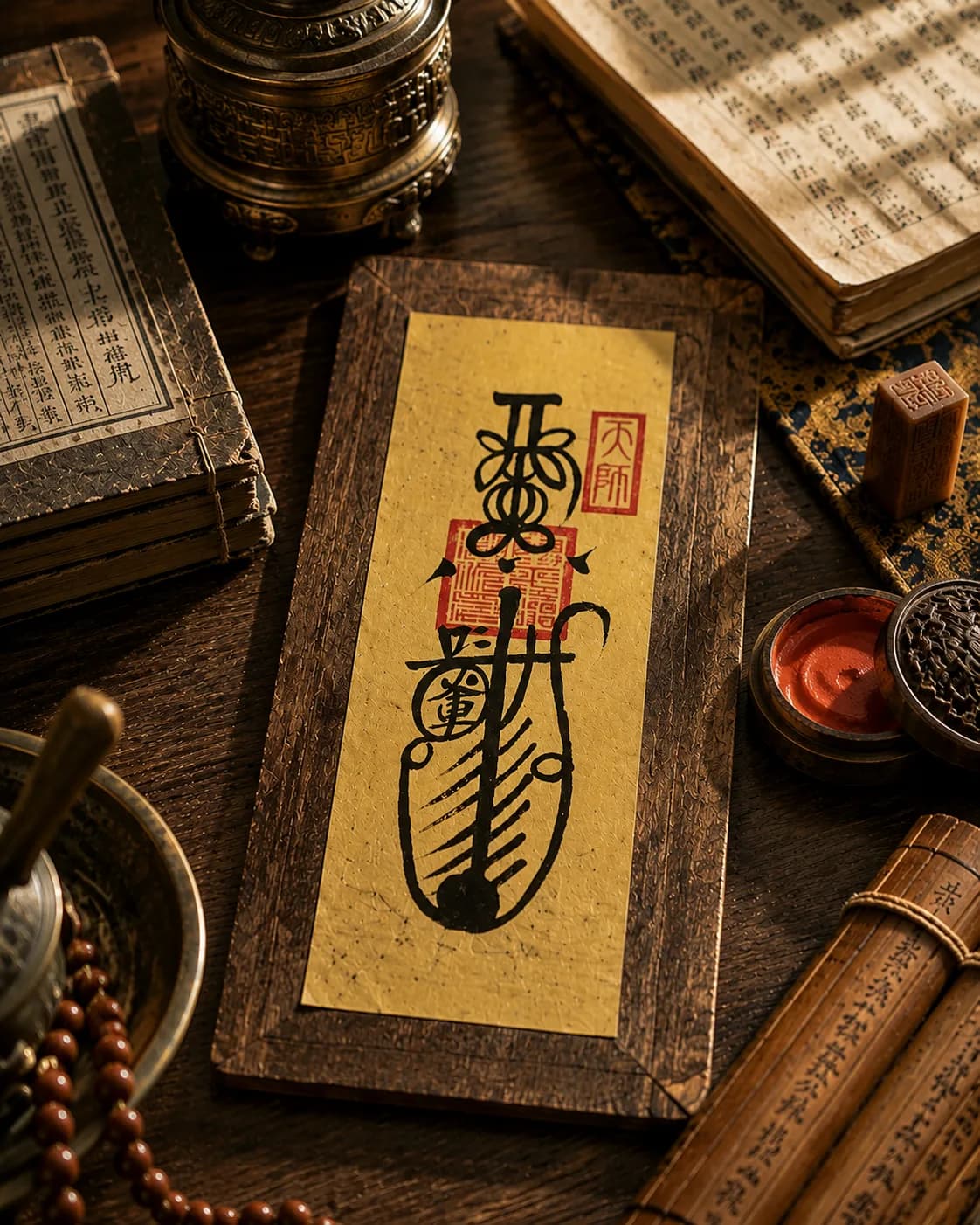
Fu is a Chinese term commonly used for written talismanic symbols in Daoist ritual contexts. Designs, uses, transmission, and interpretation vary across traditions, so a modern seller should not present a printed symbol as a universal ritual object, a clergy-made artifact, or a guaranteed source of results.
Stop scrolling the pattern. Name the chapter.
Keep a protection blessing close for travel, home, family, and the new beginning that needs extra steadiness. Symbolic only — no guaranteed outcomes. Guest checkout for ready-made seals.
Unnamed intentions scatter first. Keep one seal close.
Related piece
Guardian Protection Talisman
Keep a protection blessing close for travel, home, family, and the new beginning that needs extra steadiness.
View this pieceWhat fu means in context
Fu can refer to written talismanic forms associated with Daoist ritual traditions. Their visual language may include stylized writing, diagrams, seals, and cosmological references that are not easily translated by looking at one character or line.
A correct explanation names the tradition or source when known and avoids inventing a literal one-to-one translation for every mark.
Ritual object and contemporary artwork are not the same
A ritual object may have a specific community, liturgical, or lineage context. A commercial paper keepsake may be inspired by talismanic art without carrying that same status.
TalismanCove describes standard paper pieces as contemporary symbolic artworks inspired by Taoist visual traditions. They are not sold as consecrated artifacts and do not guarantee protection, wealth, health, romance, or destiny.
How to choose respectfully
Read the product's material and origin note, understand whether it is a contemporary design or a documented ritual item, and choose a life moment or intention rather than a fear-based claim.
A paper talisman can be kept in a wallet, journal, desk, or gift envelope as a personal reminder. Respect comes from clear language, care, and not pretending to possess a religious authority you do not have.
Common questions
What is a Taoist fu?
Fu is a Chinese term for written talismanic symbols in Daoist ritual contexts. Its forms and uses vary by tradition and should not be reduced to one universal translation.
Is every red paper symbol a consecrated fu?
No. Red paper and symbolic writing can be used in many contexts. A product should state clearly whether it is contemporary symbolic artwork or a documented ritual object.
Can I activate a Taoist talisman myself?
TalismanCove does not teach or claim ritual activation for its products. You can use a piece as a personal symbol without claiming a ritual status or result.
Are TalismanCove paper talismans made by Daoist clergy?
No. Standard products are contemporary symbolic artworks inspired by Taoist talismanic art and are not represented as clergy-made or consecrated artifacts.
Can a fu guarantee protection or luck?
No. Cultural context and personal meaning do not create a guaranteed result.
What is the short answer about taoist talisman?
Fu is a Chinese term commonly used for written talismanic symbols in Daoist ritual contexts. Designs, uses, transmission, and interpretation vary across traditions, so a modern seller should not present a printed symbol as a universal ritual object, a clergy-made artifact, or a guaranteed source of results.
Sources and context
These references provide cultural or terminology context. They do not support claims that a symbolic object guarantees a personal outcome.
| Reference | Publisher | Why it is included |
|---|---|---|
| Daoism | The Metropolitan Museum of Art | Museum context for the history, visual culture, and religious traditions commonly described as Daoist. |
| Daoism | Stanford Encyclopedia of Philosophy | Academic overview of Daoist texts, concepts, and the limits of treating a diverse tradition as one uniform system. |
| Daoism | Encyclopaedia Britannica | Reference overview of the historical development of institutional Daoist traditions. |