

In brief
Prosperity symbols such as Pixiu, Ruyi, abacus imagery, and red-and-gold talismanic designs appear in broader Chinese visual culture and contemporary gifting. They can represent hope, opportunity, effort, or a business milestone, but they are not financial advice and cannot guarantee income, profit, or investment results.
Stop scrolling the pattern. Name the chapter.
Invite more good fortune into the chapter you are building, with a prosperity blessing for work, money goals, and opportunity. Symbolic only — no guaranteed outcomes. Guest checkout for ready-made seals.
Unnamed intentions scatter first. Keep one seal close.
Related piece
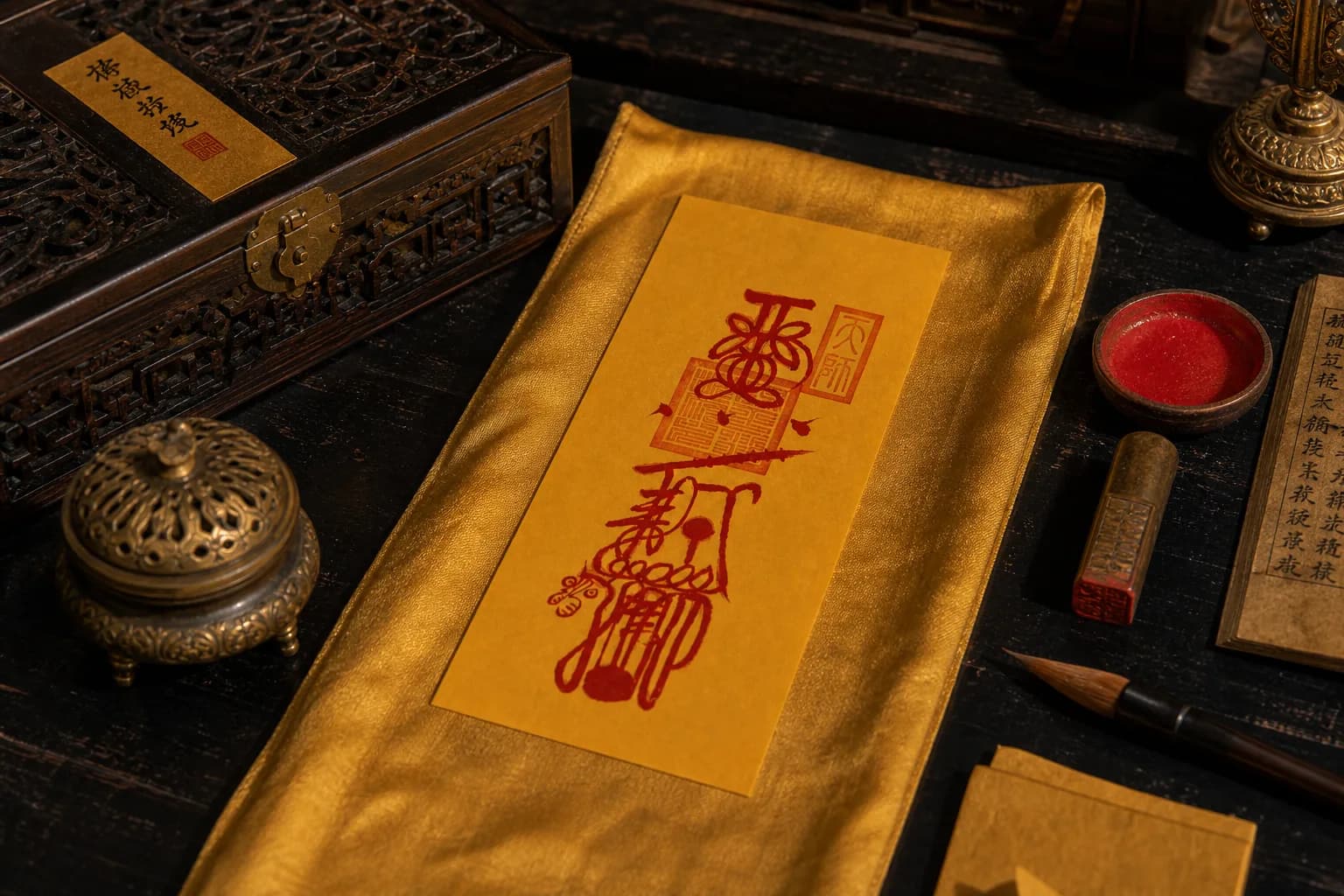
Golden Prosperity Talisman
Invite more good fortune into the chapter you are building, with a prosperity blessing for work, money goals, and opportunity.
View this pieceSymbols are not financial forecasts
Prosperity imagery often gathers around abundance, opportunity, status, and good wishes. Specific motifs have different cultural histories, so they should not be collapsed into a universal claim of money attraction.
A responsible seller makes the distinction explicit: a symbolic gift can support a founder's confidence or mark a milestone, but it cannot predict revenue or replace financial planning.
Gifting for work and new ventures
A prosperity piece can suit a new shop, first client, promotion, graduation, or annual planning moment. It is strongest when paired with a note that recognizes the recipient's work.
The Golden Prosperity Talisman is designed as a personal reminder of focus and opportunity. It is not an investment, a gambling strategy, or a promise of wealth.
Common questions
What do prosperity symbols represent?
They can represent hope, opportunity, effort, good wishes, or a meaningful business milestone. Meanings vary by context.
Is Pixiu exclusively Taoist?
No. Pixiu belongs to a wider Chinese mythological and visual tradition and should not be reduced to one religious category.
Can a prosperity talisman guarantee money?
No. It is not financial advice and cannot guarantee income, profit, investment returns, or business success.
Is a prosperity symbol a good business gift?
It can be a thoughtful launch or milestone gift when framed as encouragement for real work rather than a promise of money.
Where can I keep a prosperity symbol?
A wallet, desk, notebook, workspace, or gift envelope can be a practical place for a personal reminder.
What is the short answer about prosperity symbols?
Prosperity symbols such as Pixiu, Ruyi, abacus imagery, and red-and-gold talismanic designs appear in broader Chinese visual culture and contemporary gifting. They can represent hope, opportunity, effort, or a business milestone, but they are not financial advice and cannot guarantee income, profit, or investment results.
Sources and context
These references provide cultural or terminology context. They do not support claims that a symbolic object guarantees a personal outcome.
| Reference | Publisher | Why it is included |
|---|---|---|
| Daoism | The Metropolitan Museum of Art | Museum context for Daoist history and visual culture. |
| Daoism | Stanford Encyclopedia of Philosophy | Academic context for Daoist texts, terms, and historical diversity. |
| Daoism | Encyclopaedia Britannica | Reference overview of institutional Daoist traditions and their development. |