


In brief
The Azure Dragon, Vermilion Bird, White Tiger, and Black Tortoise are four directional guardian figures in broader Chinese cosmological imagery. They have different associations in different periods and media, and they do not guarantee protection or outcomes.
Stop scrolling the pattern. Name the chapter.
A commanding guardian blessing for a home, office, or studio that needs courage, protection, and a stronger center. Symbolic only — no guaranteed outcomes. Guest checkout for ready-made seals.
Unnamed intentions scatter first. Keep one seal close.
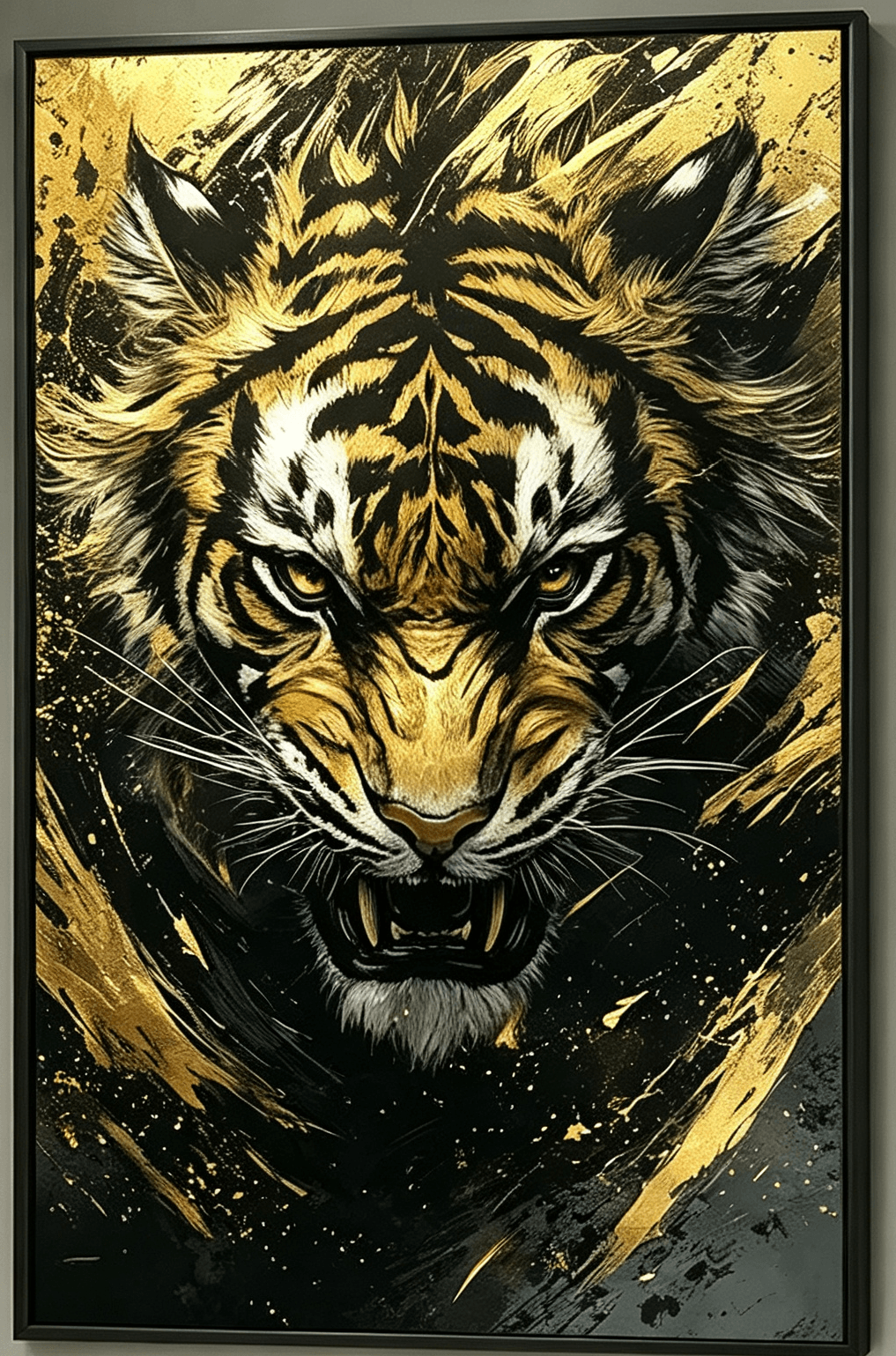
Related piece
Celestial White Tiger Guardian Scroll
A commanding guardian blessing for a home, office, or studio that needs courage, protection, and a stronger center.
View this pieceA directional visual system
The four figures are often linked with directions, seasons, and other cosmological correspondences. Their meanings shift across art, astronomy, ritual, and popular culture.
It is more accurate to call a contemporary artwork culturally inspired than to claim that it has one fixed ritual function.
The White Tiger as an artwork
The White Tiger can be interpreted as a symbol of courage, discipline, and guardianship in a contemporary home or workspace. That meaning is reflective and personal, not a promise of safety or control over events.
A wall artwork should be selected for its visual presence, material, and the qualities it helps the owner remember.
Common questions
Who are the Four Celestial Guardians?
They are the Azure Dragon, Vermilion Bird, White Tiger, and Black Tortoise.
Are their meanings fixed?
No. Associations vary by historical source, place, and visual medium.
What can the White Tiger symbolize?
It is often associated with courage, discipline, and guardianship in Chinese imagery.
Does guardian art guarantee protection?
No. It is cultural and symbolic artwork, not a guarantee.
Where can guardian artwork be placed?
Choose a room where its visual meaning and scale suit your home or workspace.
What is the short answer about guardian imagery?
The Azure Dragon, Vermilion Bird, White Tiger, and Black Tortoise are four directional guardian figures in broader Chinese cosmological imagery. They have different associations in different periods and media, and they do not guarantee protection or outcomes.
Questions from this topic
These short answers preserve the questions that shaped this guide. They are provided for cultural context and are not health, financial, legal, or ritual instructions.
Who are the Four Celestial Guardians?
The Azure Dragon, Vermilion Bird, White Tiger, and Black Tortoise belong to a wider Chinese directional and cosmological imagery. Their associations vary by medium and period; they should be presented as cultural symbolism, not safety guarantees.
Sources and context
These references provide cultural or terminology context. They do not support claims that a symbolic object guarantees a personal outcome.
| Reference | Publisher | Why it is included |
|---|---|---|
| Daoism | The Metropolitan Museum of Art | Museum context for Daoist history and visual culture. |
| Daoism | Stanford Encyclopedia of Philosophy | Academic context for Daoist texts, traditions, and terminology. |
| Daoism | Encyclopaedia Britannica | Reference context for historical development and institutions. |