


In brief
Gourds, bead strands, Shan Gui charms, linked rings, and peachwood appear in different Chinese cultural and religious contexts. Their associations vary, and a contemporary object should be described as symbolic design unless its specific ritual or historical provenance is documented.
Stop scrolling the pattern. Name the chapter.
A cinnabar blessing for fresh starts, good fortune, peaceful homes, and the better chapter you are ready to welcome. Symbolic only — no guaranteed outcomes. Guest checkout for ready-made seals.
Unnamed intentions scatter first. Keep one seal close.
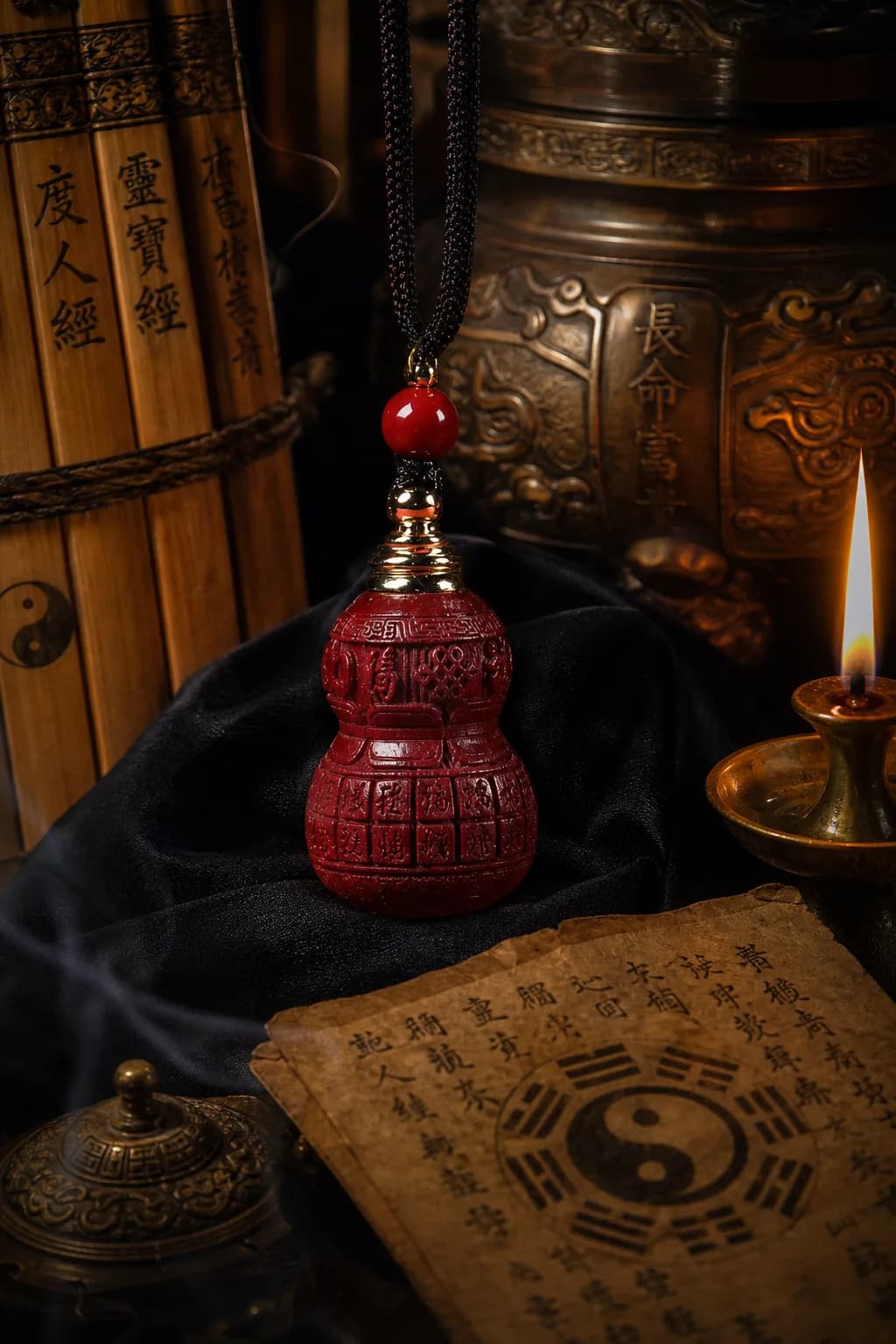
Related piece
Cinnabar Gourd Renewal Pendant
A cinnabar blessing for fresh starts, good fortune, peaceful homes, and the better chapter you are ready to welcome.
View this pieceObjects have more than one story
A gourd can carry associations with abundance and transformation; bead strands, charm coins, rings, and wood objects each have their own histories. These histories are not interchangeable or universal.
Material, date, inscription, maker, and place matter when making historical claims about a particular object.
Contemporary symbolic design
A modern pendant or bracelet can acknowledge its inspiration without being called antique, consecrated, or guaranteed protective. This gives buyers a clear and respectful account of what they are receiving.
Choose an object for its material, visual language, gift occasion, and the meaning you want to carry forward.
Common questions
Is there one official list of Daoist symbolic objects?
No. Lists vary by source, period, and community.
What does a gourd symbolize?
It has varied associations in Chinese art and folklore, including abundance and transformation.
What is a Shan Gui charm coin?
It is part of the diverse history of decorative Chinese charm coins.
Does peachwood guarantee protection?
No. Protective associations are cultural and symbolic, not a safety guarantee.
How should modern jewelry be described?
By its actual material, contemporary design, and documented inspiration.
What is the short answer about symbolic objects?
Gourds, bead strands, Shan Gui charms, linked rings, and peachwood appear in different Chinese cultural and religious contexts. Their associations vary, and a contemporary object should be described as symbolic design unless its specific ritual or historical provenance is documented.
Questions from this topic
These short answers preserve the questions that shaped this guide. They are provided for cultural context and are not health, financial, legal, or ritual instructions.
What are five common symbolic objects associated with Daoist and Chinese religious culture?
Lists of five objects vary. Bead strands, gourds, charm coins, linked rings, and peachwood are examples found in different contexts, but no universal official 'five accessories' list applies everywhere.
What are liuzhu bead strands?
Liuzhu can refer to bead strands used in devotional or ritual settings. Counts and meanings vary by tradition and object; a contemporary bracelet should not be presented as a credentialed ritual implement.
What does a gourd symbolize?
Gourds carry many associations in Chinese art and folklore, including abundance, protection, medicine, and transformation. Symbolic meaning is not a guarantee that an object prevents harm or changes fortune.
What is a Shan Gui charm coin?
Shan Gui charm coins are part of the broad history of decorative Chinese charms. A contemporary pendant is not automatically an antique, ritual artifact, or a verified protective device.
What does a linked yin-yang ring symbolize?
Linked rings can evoke complementary forces, cycles, or relational balance in contemporary design. Specific historic objects need their own provenance and context.
What is peachwood associated with?
Peachwood has protective associations in Chinese folklore and ritual culture. A modern peachwood item should be described as symbolic and cultural, not as a guaranteed safety measure.
Sources and context
These references provide cultural or terminology context. They do not support claims that a symbolic object guarantees a personal outcome.
| Reference | Publisher | Why it is included |
|---|---|---|
| Daoism | The Metropolitan Museum of Art | Museum context for Daoist history and visual culture. |
| Daoism | Stanford Encyclopedia of Philosophy | Academic context for Daoist texts, traditions, and terminology. |
| Daoism | Encyclopaedia Britannica | Reference context for historical development and institutions. |